





Introduction
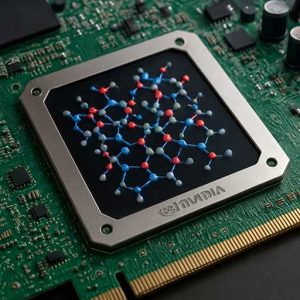
Computational biophysical chemistry integrates principles from chemistry, physics, biology, and computer science to simulate and predict the structure, dynamics, and function of biomolecules. Historically dependent on expensive supercomputers, the field has experienced a paradigm shift with the availability of high-performance GPUs, enabling highly accurate simulations on personal workstations.
GPU Architecture Overview
GPUs consist of hundreds to thousands of smaller cores optimized for parallel execution. Unlike CPUs, which focus on sequential processing, GPUs excel at batched, simultaneous tasks — making them ideal for complex operations such as matrix multiplications, force/energy calculations, and large-scale optimization in molecular simulations.
Applications in Biophysical Chemistry
Molecular Dynamics
Molecular dynamics (MD) simulations are one of the most widely used tools for studying biological and chemical systems. Each time-step calculation in MD is computationally demanding, especially for systems with millions of atoms. GPUs, using technologies like NVIDIA’s CUDA, significantly accelerate these processes, enabling simulations that were previously impractical on CPUs.
Quantum Mechanics and Electronic Simulations
Quantum mechanical calculations involve solving the Schrödinger equation for multi-electron systems. These tasks heavily rely on large-scale matrix operations, which GPUs can perform at speeds several times faster than CPUs. This acceleration is harnessed by packages like Quantum ESPRESSO and GPU-optimized versions of Gaussian.
Multiscale Modeling
Connecting atomistic models to coarse-grained, macroscopic frameworks is critical in biophysical chemistry. GPUs facilitate high-speed, hybrid computations that enable this integration, improving both resolution and scalability.
Benefits
Exceptional processing speed compared to CPUs
Capacity to model extremely large biomolecular systems
Cost savings due to the reduced need for supercomputers
Versatility across various scientific domains
Challenges
Code restructuring for parallel computing architectures
Memory limitations for certain very large datasets
Platform dependency on proprietary frameworks such as CUDA
Future Outlook
The future of GPU computing in biophysical chemistry will likely involve integration with artificial intelligence for molecular behavior prediction, application of specialized accelerators like Tensor Cores, and development of fully parallelized algorithms for unprecedented speed and accuracy. This evolution promises transformative impacts on drug design, protein engineering, and complex biological simulations.
At the software level, a variety of GPU-optimized implementations and libraries have been developed, each contributing to different areas of computational chemistry. For classical molecular dynamics simulations, engines such as AMBER/pmemd.cuda, and the latest versions of GROMACS and NAMD, utilize offload strategies or fully execute time loops on accelerators. These approaches enable microsecond-scale simulations or multiple trajectory sets at reasonable cost and time while facilitating high-precision, reproducible computations. In some cases, observed computational speeds significantly surpass CPU equivalents, expanding the range of tractable research problems.
Beyond classical simulations, GPU architectures offer substantial opportunities for quantum chemistry and ab initio simulations. Packages designed for GPU acceleration, or those that offload computationally intensive components — such as TeraChem — enable self-consistent calculations and QM/MM dynamics for larger systems. This capability is particularly important for studying electron–nuclear processes, energy transfer, and simulated spectroscopy, making high-accuracy quantum-composite methods feasible for medium to large biomolecular systems.
Methodologically, the availability of greater computational power has led to two key challenges: first, the need to revise experimental and statistical design of simulations to optimally leverage GPU bandwidth; second, the increasing need for validation, inter-implementation comparison, and management of numerical errors arising from differences in precision or algorithmic approaches. Researchers must explicitly report hardware and software details to ensure reproducibility and accurate quantitative interpretation of results.
In practice, the choice among different strategies (partial offload, fully executing inner loops on the GPU, or running multiple trajectories in parallel on a single accelerator) should be based on problem-specific characteristics. Experimental design can benefit from concurrently running multiple lightweight simulations on one GPU, improving overall efficiency; this approach is particularly suitable for parametric sensitivity studies, free energy calculations, and enhanced sampling methods.
Looking forward, convergence in hardware development, higher-level tools for easier accelerator utilization, and evolving software standards supporting multi-architecture APIs (CUDA, OpenCL, SYCL, etc.) are expected to further expand the boundaries of modeling in biophysical chemistry. For graduate and postdoctoral researchers, a deep understanding of parallelization patterns, numerical corrections, and software implementation fundamentals, combined with skills in designing computational experiments, is essential for producing reliable and impactful research.